Annual goals have a timing problem. January feels important, February feels recoverable, and by October the goal has become a historical document.
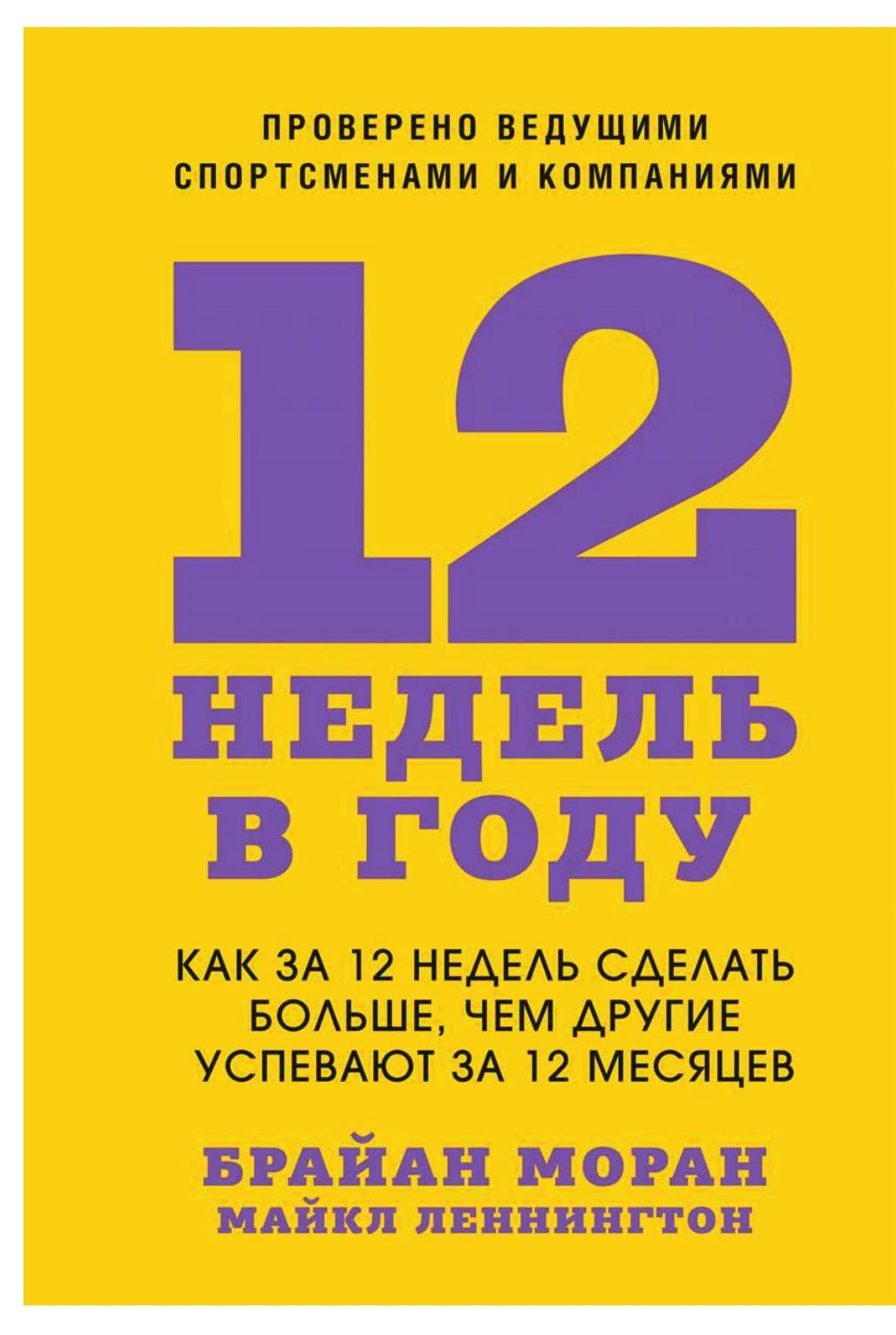
The 12 Week Year by Brian Moran and Michael Lennington compresses the planning cycle. You choose a small number of outcomes for twelve weeks, identify the weekly actions that should produce them, and review execution before the year has time to disappear.
The method is useful. It can also turn three ordinary months into a corporate emergency if every week becomes a test of personal worth.
The method in one table
| Layer | Question | Example |
|---|---|---|
| Vision | Why does this matter? | I want reliable freelance income |
| 12-week outcome | What will be true by week 12? | Sign two recurring clients |
| Tactics | What actions should drive it? | Send five tailored pitches each week |
| Weekly plan | What happens this week? | Research and send five pitches |
| Score | Did the planned actions happen? | 4 of 5 = 80% |
| Review | What needs to change? | Improve targeting, reduce volume, or revise the offer |
The important distinction is between an outcome and a tactic. You can control sending pitches more directly than signing clients.
The official 12 Week Year field guide includes more than a goal and deadline: vision, planning, process control, measurement, time use, accountability, commitment, and review all belong to the method.
That breadth is useful and dangerous. You can adopt the shorter horizon without importing every scorecard and meeting. Start with the minimum system that changes weekly decisions.
Why twelve weeks can work
A shorter horizon improves visibility. The deadline is close enough to affect today’s choices, but long enough to produce something meaningful.
It also creates more review points. Instead of one dramatic annual postmortem, you get four chances to notice that a strategy is failing.
The psychological benefit is not that twelve is a magic number. It is that the loop between plan, action, evidence, and adjustment becomes shorter.
Shorter horizons also expose optimistic estimates sooner. In classic work on the planning fallacy, people underestimated their own project times partly because they focused on ideal future scenarios and underused past experience.
If similar work took sixteen weeks, a twelve-week label does not compress dependencies. Reduce scope, add resources, or choose a different result.
Start with fewer outcomes than feels ambitious
A 12-week plan with six major goals is not ambitious. It is six plans sharing one calendar.
One to three outcomes are usually enough. Each should be specific enough to recognize and important enough to survive contact with a busy week.
Weak:
- grow the business;
- get fit;
- improve my English.
Stronger:
- publish and sell the first version of a workshop;
- complete 24 strength sessions;
- finish one B2 course and hold six speaking sessions.
The goal still needs a reality check. If it requires resources, authority, or time you do not have, shortening the horizon will not improve the arithmetic.
Goal-setting research broadly supports specific and sufficiently challenging goals across many tasks, with conditions such as feedback, skill, commitment, and complexity. Locke and Latham summarize this in a review of goal-setting theory.
For unfamiliar complex tasks, a demanding outcome may not provide a strategy. Research by Earley, Connolly, and Ekegren showed that difficult goals on a novel task could lead to ineffective strategy search. Early tactics should include learning and testing, not only quotas.
Define outcome, boundary, and evidence
Outcome: what will be observably true?
Boundary: what is outside this cycle?
Evidence: what artifact or measure confirms progress?
For a workshop, the outcome may be one paid pilot delivered to five participants. The boundary excludes a full recorded course. Evidence includes the offer, sign-ups, delivery, and structured feedback.
Tactics are hypotheses, not commandments
The method asks you to identify actions that should lead to the outcome. The word “should” matters.
Sending five pitches per week may produce clients. It may also reveal that the offer is wrong. Completing every tactic perfectly does not guarantee the outcome.
Treat tactics as hypotheses:
If I repeat this action at this frequency, I expect this result to become more likely.
Then review both execution and evidence. A high score on a bad strategy is efficient travel in the wrong direction.
Separate lead measures from lag measures. Lead measures are actions you can influence now, such as interviews or proposals. Lag measures are outcomes that appear later, such as revenue. Watch both without pretending one guarantees the other.
If tactics happen and the outcome remains flat, revise the causal hypothesis. If the outcome improves without a tactic, that tactic may be unnecessary. Execution discipline includes removing work that does not earn its place.
The weekly score is useful and easy to abuse
The standard execution score is simple:
completed planned actions ÷ total planned actions × 100If you completed 8 of 10 actions, the score is 80%.
This helps separate “I felt busy” from “I followed the plan.” It does not measure:
- quality;
- difficulty;
- impact;
- unexpected opportunities;
- whether the plan was sensible;
- whether rest was the correct decision.
Do not add easy actions to protect the score. Once a metric becomes the goal, the spreadsheet begins negotiating with reality on your behalf.
The official weekly scorecard uses the same simple completion percentage. Keep the denominator honest: only planned tactics belong there, and changing the plan after the fact should be recorded.
A meta-analysis of 138 studies with 19,951 participants found a moderate positive effect for interventions that increased monitoring, with larger effects when outcomes were recorded or reported. That supports feedback, not score worship.
Add four questions beside the percentage: What evidence did completed tactics produce? Which skipped action should be removed? Did the week protect health and maintenance? Is the outcome still feasible?
Build a week that fits before it starts
For each tactic, estimate:
- frequency;
- duration;
- preparation;
- dependency on other people;
- minimum acceptable version.
Then put the actions into an actual week. If the plan needs fourteen hours and you have six, do not call the gap “motivation.”
A useful weekly review asks:
- What did I plan?
- What happened?
- What evidence did the actions produce?
- What blocked execution?
- What should be removed, reduced, or changed?
Give tactics a starting cue
“Conduct interviews” remains vulnerable to free-time negotiation. Write: “After Tuesday’s first meeting, send three interview invitations before opening project chat.”
A classic meta-analysis of implementation intentions synthesized 94 tests and found a positive effect on goal attainment. The cue still needs a real opportunity; syntax does not create capacity.
Reserve the tactic in the calendar with preparation and follow-up. Start dependencies early enough for other people’s response time.
What to do after a bad week
The method can encourage a clean-slate fantasy: new week, fresh score, no emotional baggage.
Real life is messier. Illness, care work, deadlines, and random disruption do not respect planning cycles.
After a low-execution week:
- identify whether the problem was capacity, clarity, or avoidance;
- keep only the tactics that still matter;
- reduce the minimum version;
- reschedule dependencies honestly;
- do not try to “make up” every missed action.
A plan is a navigation tool, not debt collection.
Build three operating modes
| Mode | Use |
|---|---|
| Normal | Intended weekly tactics |
| Reduced | Smallest useful route during a constrained week |
| Pause or repair | Health, safety, or a dependency requires redesign |
Reduced mode protects the central tactic while dropping optional volume. Pause mode acknowledges that recovery, treatment, or renegotiation can be the right work.
Close the cycle deliberately
At week 12, compare outcome, tactics, assumptions, and conditions. Decide what to continue, redesign, archive, or move later. Do not roll every unfinished tactic forward automatically; a new cycle is a new capacity decision, not a storage bin for planning debt.
Include dependencies and decision owners
A personal scorecard can hide work that depends on another person. For every outcome, list approvals, information, access, money, or expertise that must arrive. Name the owner and the date when delay changes the plan.
For a launch, legal review in week 10 is not a tactic—it is a late risk. Request review earlier or test the riskiest claim in week 2. A twelve-week horizon is useful when it brings uncertainty forward, not when it compresses all waiting into the final fortnight.
Audit total capacity before week one
Estimate tactic duration, preparation, travel, coordination, transitions, and recovery. Place that load beside existing obligations. If twelve hours of tactics must fit into six available hours, reduce the plan before measuring execution.
Reserve buffer for ordinary variation. A week planned to 100 percent of visible time assumes no delay, illness, support request, or cognitive recovery. Buffer is part of the plan, not weak ambition.
Do not turn four quarters into permanent urgency
The compressed horizon can encourage back-to-back intensity. Not every part of life benefits from launch cadence, and not every week needs a stretch goal. Use maintenance seasons, recovery, and deliberately lighter cycles.
Keep one growth outcome while other areas operate in maintenance mode. At the end, reconsider the portfolio instead of renewing the same priority automatically. The system should shorten feedback, not make every Monday feel like the final week of the year.
Using the 12 Week Year in Flammy
A clean setup looks like this:
- create one quest for the 12-week outcome;
- add only the repeatable tactics as tasks;
- assign XP based on effort, not prestige;
- define a minimum version for difficult weeks;
- review the action set every week.
For example:
| Flammy element | Example |
|---|---|
| Quest | Publish the first workshop by week 12 |
| Task | Conduct one customer interview |
| Task | Draft one lesson |
| Minimum | Outline one lesson section |
| Reward | A guilt-free day trip after launch |
XP shows execution. The quest keeps the result visible. Neither proves the market will cooperate.
The verdict
The 12 Week Year is strongest as a shorter learning loop:
- choose one to three outcomes;
- identify a few plausible weekly actions;
- make them fit the calendar;
- score execution without worshipping the score;
- revise the strategy from evidence.
The method does not create more time. It makes vague annual ambition harder to hide inside the calendar.
Related reading
- Continue with building a 90-day plan.
- Continue with a simple weekly planning ritual.
Turn one 12-week outcome into a workable quest. Add the few weekly actions that drive it, choose a realistic minimum, and review the evidence every week.
Build a 12-week quest in Flammy